
The bad news
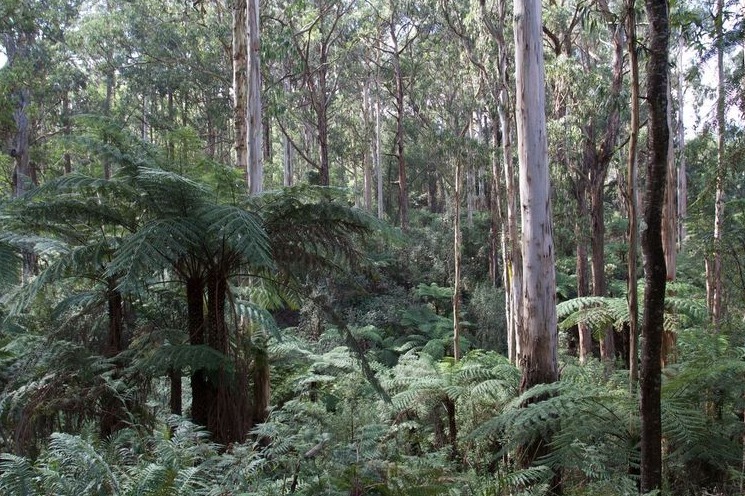
The mortality rate of trees in forests from Tasmania to the Top End is increasing as the world warms, according to a new study published in Nature Plants. To establish mortality rates for Australian forests, Professor Medlyn, a plant physiological ecologist from Western Sydney University, and her colleagues examined 83 years’ worth of state government and independent data from 203,721 individual trees, representing 958 species across 2,724 sites in the eastern states, the NT, ACT, and northern WA. (Monitoring sites in South Australia were not large enough to be included in the study, and the researchers could not access WA government data for south-western forests.)
Professor Medlyn, quoted in an ABC news story, said the rises in mortality rates might seem small, but they show a fundamental part of forest function has been changing.
The implication will be that you’ve got a reduction in the amount of carbon that will be stored because we’re turning over trees faster than we used to. We’re not going to lose all of our forests by any means, but there’s clearly really quite significant change underway.
The study links temperature rises to more tree deaths, but exactly how heat kills trees is not known. Professor Medlyn said several hypotheses need to be tested. These included increased water stress, or whether frequent heatwaves cause cumulative damage that eventually kills trees.
Better news
According to The Herald, Scotland, a Scottish company is helping to regrow forests with specially made mushroom pellets, using the ‘superpowers’ of fungi. Teams from Rhizocore Technologies are collecting samples of fungi from around the world, with the goal of curating Earth’s largest library of fungal specimens.
Trees need a system of mycorrhizal fungi around their roots in order to thrive, forming a symbiotic relationship. Deforestation and human activity can lead to this vital fungi degrading in the soil. The company’s ‘rhizopellets’ are planted alongside saplings and enhance the roots of the tree as it grows. Each pellet is impregnated with a specific type of fungal culture which will help the tree thrive in its location.
Rhizocore’s plant data scientist Dr Petra Guy said:
A lot of reforestation might take place in ex-agricultural soils, and the trees you’re planting might need the specific type of fungi which won’t occur there, because there have been no trees there for a long time.
***
And in China, efforts to slow land degradation and climate change by planting trees and restoring grasslands have shifted water around the country in huge, unforeseen ways, according to a study published in October 2025 in the journal Earth’s Future.
Between 2001 and 2020, changes in vegetation cover reduced the amount of fresh water available for humans and ecosystems in the eastern monsoon region and northwestern arid region, which together make up 74 per cent of China’s land area. Over the same period, water availability increased in China’s Tibetan Plateau region, which makes up the remaining land area. But a massive regreening effort over the past decades has restored ecosystem, particularly in the Loess Plateau in north-central China and reactivated the water cycle.