
Interview Recording
Part one (1 hour 36 minutes)
Part two (52 minutes)
Interview Transcript
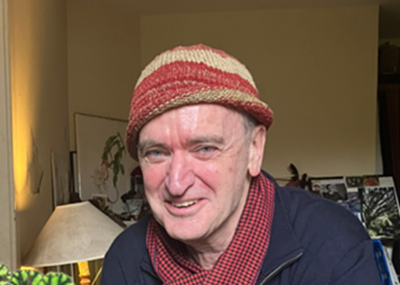
Stuart Read interviewed on 9 August 2025 by Roslyn Burge
Synopsis
Born in 1962, Stuart Read grew up in New Zealand – Eastbourne, across the harbour from Wellington. A love of science and horticulture were fostered by parents who were keen gardeners and he recalled wet days sitting with his mother on the divan getting out the toffee tin and look at all the labels of things that may or may not have survived in the garden. A love of names, and language.
Before studying at Lincoln College in Christchurch, Stuart undertook an apprenticeship at a large production nursery in Taranaki, famous for rhododendrons. He moved to Canberra in 1990, working in the Department of Environment and Heritage before moving to Sydney in 1997, where he has worked in the State entities for Heritage for 22 years.
Working in Canberra he described as the tail-end of the golden years of the Australian Heritage Commission, meeting people who specialised in Aboriginal or natural or cultural heritage. People he described as my tribe actually, describing their style and flair.
Around this time and through co-workers such as Juliet Ramsay he discovered AGHS. He described the frisson of working in Canberra with proximity to politics, big ideas and shifting spheres of interest, and that intellectual stimulus.
As a member of the AGHS Stuart recalled the character of the ACT Branch, which punched above its weight – highly educated, highly skilled – and benefit of a small city of Canberra, with ready access to national institutions such as the National Library, visits to historic homesteads and publications produced.
Through AGHS, Stuart learnt of early work of Tasmanians, Phyl Simons, and regularly communicates with Gwenda Sheridan, with whom he worked on the advocacy for the Cambria landscape in eastern Tasmania.
Stuart has been a member of the Sydney Branch committee (sometimes as Chair – as he is now) since moving to Sydney in 1997 and references the shifts in interests and character of branches. Recently this branch has conducted comparative walks of 1970s vs 1890s parklands, and highlighted heritage listing achievements of the Green Necklace project conducted by AILA.
As a long-time member of ICOMOS Stuart has attended international workshops and assisted with publications … He spoke about his presentation in France at a conference recognising WWI Avenues of Honour – which led to further work on Australian Avenues of Honour, and the Society’s Landscapes at Risk.
Attending conferences is a big part of Stuart’s membership. He recalled the first South Australian conference and was looking forward to the 2025 one in Adelaide, recognising the volcanic underpinnings of his homeland and the south-east of Australia. He is part of the organising committee for the Orange conference in 2026 and touches briefly on volunteering for the Society.
Stuart and Bronwyn Blake were co-chairs of the Society in 2020 and he recalls the absolute joy of this innovation – working together, coordinating their different skills.
He is a member of a number of kindred organisations: the Dry Stone Wall Association of Australia; Camden Park Preservation Committee; the International Dendrology Society; and Yaralla Estate Community Advisory Committee. He discusses the work of these organisations particularly Camden Park.
Towards the end of the interview Stuart describes the work and role of several individuals who have influenced him and who he is in communication with about their work and garden history.
The interview concludes with Stuart describing his own wonderful array of plants growing well in a very small section of his apartment, cuttings and seeds gathered along walks and successfully grown.