
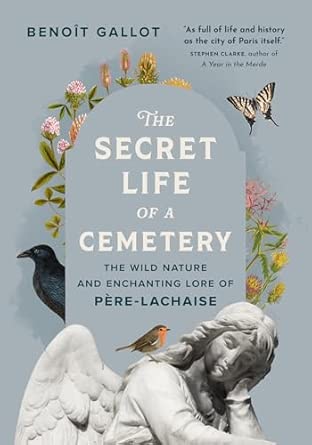
The secret life of a cemetery: the wild nature and enchanting lore of Père Lachaise by Benoît Gallot, Greystone Books, 2025
Translated from French, this account by Benoît Gallot, who is curator (what we would term ‘manager’) of Père Lachaise Cemetery in Paris, provides a multi-layered exploration of the site. Gallot, son of a tomb stonemason and incidentally born on Halloween, is enchanted rather than spooked by the cemetery viewed from his home, provided with his job and located within the site boundaries. He describes the cultural landscape of the 110 acres of the cemetery as a landscape filled with stone monuments, ancient trees, wildlife, mourners, imagined ghosts, famous interments and tourists drawn by the history and atmosphere of the place; all amongst the approximately 1.3 million bodies in
70,000 graves and mausoleums.
The cemetery established in 1804 was originally designed as an ornamental garden in naturalistic design with decorative plantings and flower beds. It employs five gardeners to look after these. There are also 20 groundskeepers who rake leaves, weed the cobbled avenues and paths (pesticides were discontinued in 2015 and re-turfing of paved paths is in progress) and remove tourist litter. In addition, contract arborists care for some 4,000 trees, some of them of considerable age and significance. Gallot describes the horticultural care of tree avenues, gardening to maintain a respectfully tidy environment and a rewilding to increase the environmental credentials. He also gives enlightening administrative detail of how the heritage-listed cemetery is run. The site is now a biodiversity haven with wildflowers, including orchids and endangered species. There are more than 60 species of bird, breeding foxes, stone martens, friendly stray cats and bees in recently installed hives.
This charming little book reminds us that cemeteries for housing the dead and comforting the bereaved are also full of life, with plants growing plants in cultural landscapes.