
- This event has passed.
Zoom Lecture: ‘Politics, Plants and Gardens: Empress Maria Feodovna and Pavlosk Park’ by Dr Ekaterina Heath
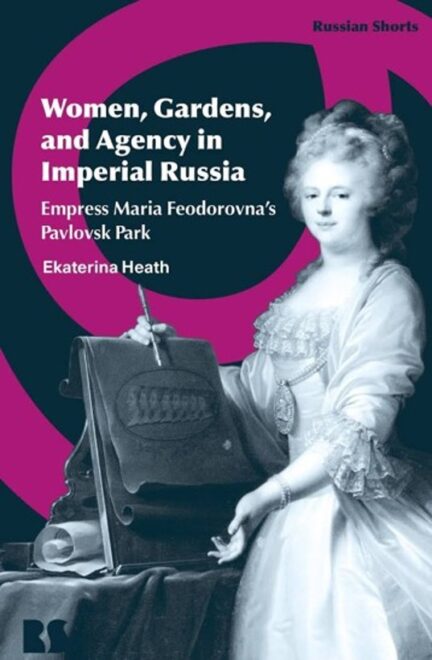 What do you do when you have political ambitions but no formal power? If you are Empress Maria Feodorovna of Russia, daughter-in-law to Catherine the Great, wife of the volatile Paul I, mother of two future tsars, you build a garden and make it speak. Over fifty years, Maria Feodorovna transformed Pavlovsk Park, just south of St Petersburg, into a sophisticated instrument of political power. She used monuments, architecture, flowers, and trees to cultivate alliances, manage family rivalries and shape political debates of her age.
One of the episodes has an Australian dimension. In 1795, Joseph Banks sent Maria Feodorovna more than 200 exotic plant species from Kew Gardens. Hidden among them was New Zealand flax (Phormium tenax), the very plant Britain was trying to cultivate in its Pacific colonies to free the Royal Navy from its dependence on Russian rope and sailcloth. The colonisation of New South Wales was partly driven by this ambition. Yet here was Banks delivering the plant directly to the Russian imperial family. Maria Feodorovna understood the message. What did she do with it, and what does this episode tell us about the role of plants in eighteenth-century diplomacy?
This lecture draws on my recent book, Women, Gardens, and Agency in Imperial Russia: Empress Maria Feodorovna’s Pavlovsk Park (1777–1828) (Bloomsbury, 2026), to explore the political life of Russia’s largest landscape garden. We will encounter monuments built to flatter a dangerous mother-in-law, tree plantings that encoded succession agreements, and diplomatic gifts displayed in the garden as proof of international alliances.
Hidden among Pavlovsk’s landscapes was also an experiment in social control. Maria Feodorovna believed that a landowner should be able to observe, and quietly guide, the lives of her peasants. She built elevated viewpoints from which visitors could watch serfs at work, designed a model village whose circular layout placed every household in view, and commissioned a working farm nearby. At a moment when her son, Alexander I, was debating the abolition of serfdom, Pavlovsk became a living argument for preserving the existing order.
After the Napoleonic Wars the estate filled with military veterans who served as guides, hermits in garden pavilions, and boatmen on the park’s rivers, staged figures in a landscape designed to resemble an Elysian paradise. What appeared to be a picturesque garden was simultaneously a welfare institution and a theatre of imperial memory.
This talk reveals how one woman used a garden as a means of practising politics through other means.
Time: 6:00 pm start – log in from 5:45 pm, finishes at 8:00 pm
Cost: AGHS Members: $15, Non-Members: $20. Note: Bookings essential.
Book: at Trybooking.
Location: A Zoom link will be provided with a reminder email on Monday 24 August.
Enquiries: Michaela Hill 0413 265 110 or Robyn Teed 0447 256 518
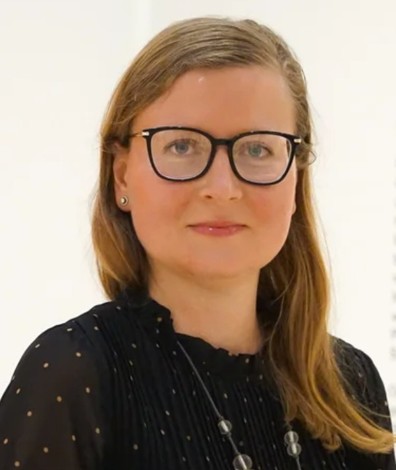 Dr Ekaterina Heath is a historian of gardens and visual culture with a particular interest in the movement of plants across empires during the eighteenth and nineteenth centuries. Her research explores how plants acquired new meanings as they travelled between continents, and how gardens functioned as spaces of diplomacy and political expression. Her publications have examined topics including botanical diplomacy, plant collecting, the representation of plants in art, women and gardens in imperial Russia, and the role of gardens in shaping political relationships. Her recent book, Women, Gardens, and Agency in Imperial Russia, explores how Empress Maria Feodorovna used Pavlovsk Park to influence politics and articulate her ideas.