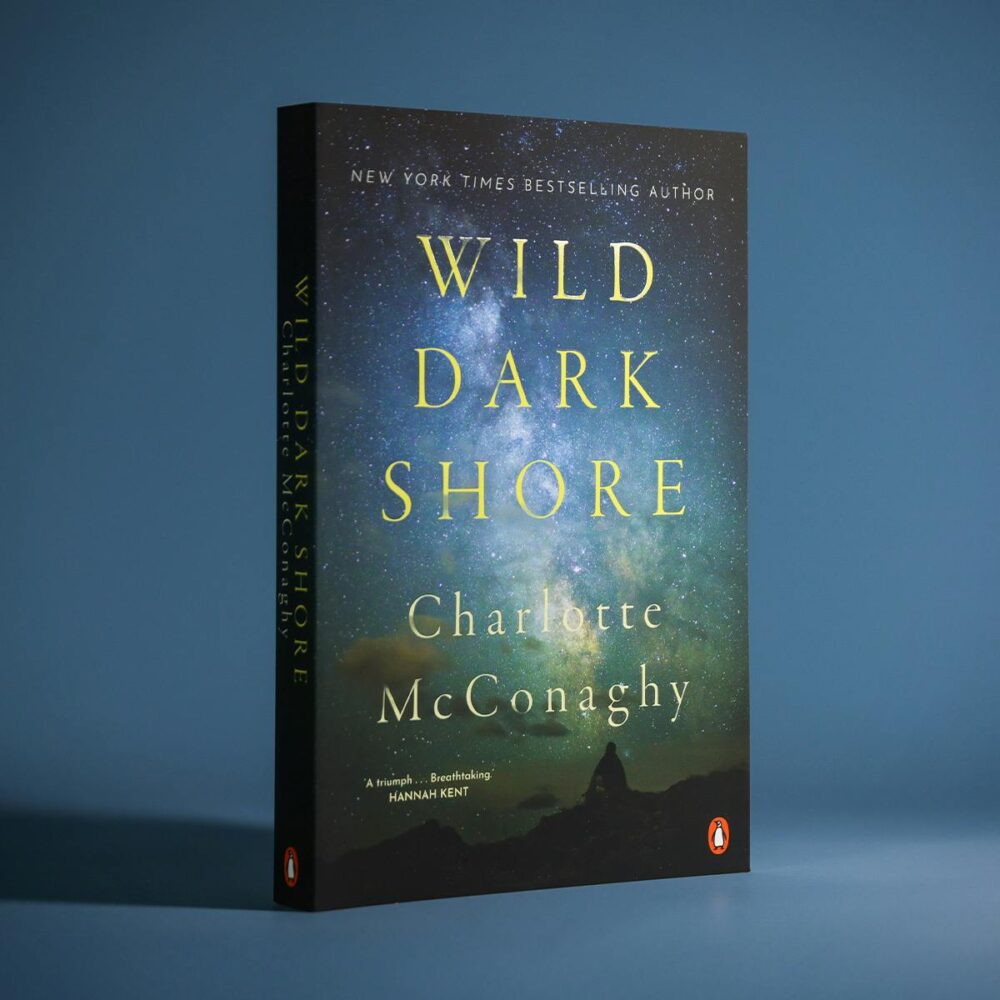
Wild Dark Shore by Charlotte McConaghy, Penguin/ Random House 2025
What would be the most disturbing moral question any botanist, plantsperson, passionate gardener or naturalist could face? Imagine if you could only save a small proportion of the world’s seeds but were tasked with deciding which ones? Would you choose the beautiful, the rare and ancient like the Wollemi pine or perhaps precious icons of your own landscape? Or would you be pragmatic in selecting only seeds of those plants that feed the human race and keep it alive? The complexity and diversity of all life forms and their interactions lie at the heart of this painful dilemma.
This question lurks beneath, not a philosophic paper, not a botanist’s manual but a provocative novel by Australian writer Charlotte McConaghy. Wild Dark Shore. longlisted for the 2026 Stella Prize, was inspired by an incident in the Svalbard Global Seedbank Vault when a tunnel was partially flooded in 2016 due to melting permafrost.
McConaghy sets her seedbank on the other side of the world – an island between Tasmania and Antarctica, loosely based on Macquarie Island which she visited for background research. So the narrative bristles with descriptions of the seal and sea lion colonies, the different types of penguins, the seabirds and unique plant species of Macquarie Island, not to mention the ever pounding Southern Ocean which gives and takes at will.
Fiction is a valid way of passing on an important message but you need to suspend disbelief as you become immersed in this tale of the last man left on the island after the research station has been closed. His responsibility is to pack up what is left of the human habitation on the island – including the seedbank – while the icecap is melting and the seas are rising. The far-reaching effects of climate change have left him with imponderable questions. These haunt the reader.
McConaghy demonstrates a penchant for embedding the big questions of global warming, species extinction and rising sea levels into novels that bridge the commercial/literary divide. Wild Dark Shore contains aspects of both. It has all the ingredients of a ripping yarn (a body washed up by the tide, sinister mysteries, a middle-aged passion, sabotage, near-death disasters) plus lyrical descriptions of the ocean and the wildlife and more subtle reminders of the human desecration that lingers on the few remaining truly wild places on earth. There is also the story of three children raised by their widowed father on this isolated outcrop, the youngest of them an irritatingly precocious nine-year-old who, as a budding botanist, becomes a convenient mouthpiece for slices of information about the plant life. The child presents as a maddening dichotomy of half angel/half brat. His fall from grace has devastating consequences for them all.
As well as the cataclysms of nature, this novel probes the effects of human isolation, social and geographic, and the behavioural changes it wrings. How will one of the other children, a moody teenager who has spent her formative years on a windswept remote island, adapt to the wider world? She longs to escape to the mainland but will she have the skills to cope? McConaghy asks if we are inherently social animals, despite our longings for space and privacy and remote wild places?
Wrapping all these big questions up in the palatable form of a compulsive read has obviously worked for McConaghy whose previous titles, Migrations and Once There Were Wolves, have been on New York Times best seller lists and translated into other languages. If you are looking for a book to give a friend, young adult or mature grandchild who loves the natural world, this could fit the bill. And if you know a reader who is still equivocal about the dire effects of climate change, Wide Dark Shore might actually bring about a change of mind.