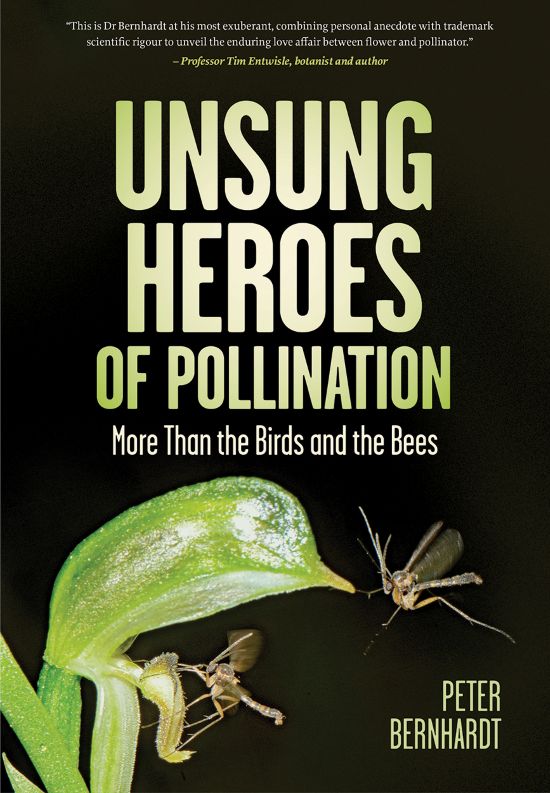
This is a brilliant book for both garden historians and gardeners. Yes I know they often overlap!
AGHS readers will possibly know the author Peter Bernhardt from his segments on Robyn Williams’ ABC Science Show. I did not, but did hear him give an engaging lecture at the Australian National Botanic Gardens recently. He is an excellent ‘science teacher’. Though born in Brooklyn, USA, Bernhardt has had a long and deep engagement with Australia since doing a PhD at the University of Melbourne. Since then he has won many awards as scientist and teacher and he remains a supporter of the Nutcote Museum (May Gibb’s house and garden) in Neutral Bay as well as the Kunming Institute of Botany.
Simply put, this book is to plant nerds like the author a wonderful mind exercise. I thought after well over 70 years of reading plant and plant history books that I knew a bit but of course I don’t. I also had a negative view of CSIRO publishing for the extraordinary cost of some of their publications, even though I once worked for the organisation. This book is a refreshing change in pricing, especially with a discount offered for attending the lecture!
Once you have read Unsung heroes of pollination and are in an old or new garden, marvelling at the colour of the flowers or the diversity that nature brings (one of the main reasons to go into a garden in my view) your visit will have been deeply enriched from the moment you enter. Bernhardt offers a blend of history and science told by a good communicator. He has a huge understanding of the science surrounding how plants work and, more important, how the interaction of those plants with the world through their pollinators leads to the diversity of the plants and the pollinators.
However, be prepared for some serious mind work! This book will keep those neurones busy.
Bernhardt starts off with a deep introduction to how flowers work and slowly but inevitably moves into the truly complex world of plant pollinators and their hundreds of millions of years of interactions with plants. I learned so much about my own garden. For instance my small but loved collection of native greenhood orchids (who knew there were 300 species in Australia?) are discussed thus:
We like to think that cheaters never prosper, but greenhoods in bloom do nothing but cheat and they are selective fakers. They appeal only to male fungus gnats, the little fools all lured into the flower by promises of sex. One of the probable reasons why there are so many greenhood species is that their flowers appeal to different species of fungus gnats in more than one family, and the same orchid may depend on different gnats if it grows in different locations.
Woven through the narrative is the history of the discovery of each of Bernhardt’s many scientific observations starting with why his hero, Charles Darwin, could not possibly have understood how certain events occurred until further scientific discoveries were made. Going back to greenhoods, he takes us to their whitefella discovery in Western Australia in 1801 (during the voyage of The Investigator) by Robert Brown who named the first greenhood (Pterostylis) species.
The book concludes with an exhortation as to why gardeners, and indeed all humans, might or should take an interest in pollination. Bernhardt strongly and amusingly sets out the benefits of citizen science:
By knowing the lives of some of your non-human neighbours, and sharing your data with like-minded associates and administrators, you might be helping to protect that refuge or reserve down the street from future development…Spying on the sex lives of fellow humans is reprehensible but the work we do for biodiversity has social value and may make you a raconteur of interest at parties.
Besides me, this book is warmly endorsed by the AGHS patron Professor Tim Entwisle. The cover reads: ‘This is Dr Bernhardt at his most exuberant, combining personal anecdote with trademark scientific rigour to unveil the enduring love affair between flower and pollinator’.
I could not agree more.
Max Bourke AM was a science journalist (Robyn Williams’ predecessor at the ABC) and worked briefly at the CSIRO Division of Plant Industry during a mixed career in the arts, cultural heritage and farming investment. He once opened an art exhibition with Peter Raven at the Missouri Botanical Gardens where Peter Bernhardt has worked for many years. He has been involved with AGHS at multiple levels over many years.